

What best describes your situation?
Carriers, insurance housing companies, and suppliers are three different roles. Knowing which one you can occupy decides whether the channel is reachable.
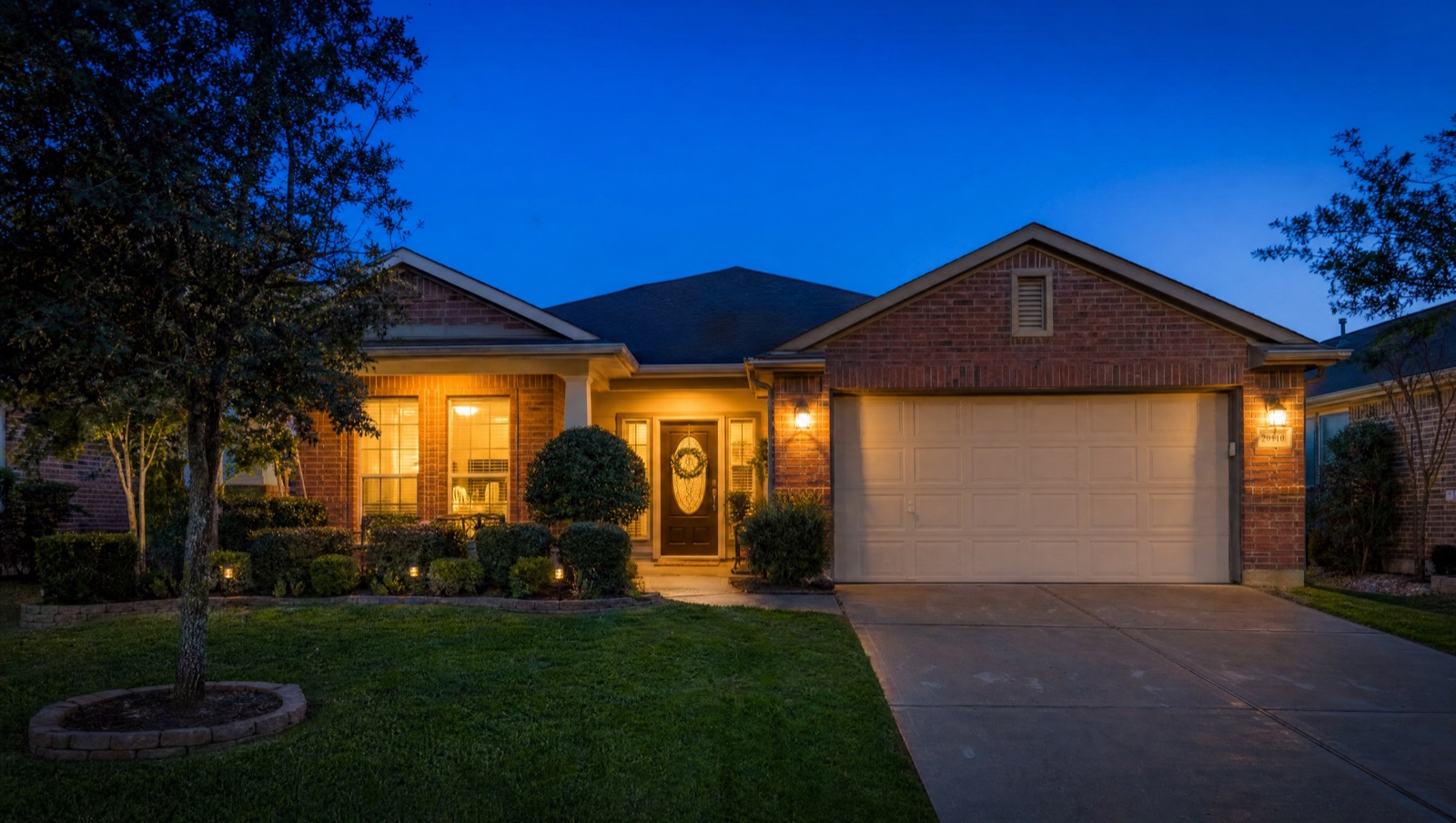
An insurance housing provider supplies furnished homes to the companies that place displaced policyholders under a loss-of-use claim. Texas Corporate Homes is a supplier in that chain, not a carrier and not a placement agency. We hold 150+ furnished single-family homes across DFW, Austin, Houston, and San Antonio and make them available to insurance housing companies.
The distinction in that first sentence is the whole article. Most confusion about this channel comes from collapsing three different roles into one.
| Party | What they do | Who they answer to |
|---|---|---|
| Carrier | Adjusts the claim and funds additional living expenses under the loss-of-use provision | The policyholder |
| Insurance housing company | Takes the referral, finds suitable accommodation, manages the placement and any extensions | The carrier and the adjuster |
| Housing supplier (us) | Holds furnished inventory, confirms availability, prepares the home, runs the stay | The insurance housing company |
We state our position plainly because suppliers who blur it cause problems for everyone. A supplier who claims a direct carrier relationship is either overstating their position or competing with the company that refers them work.
As a principle: know which link of the chain you occupy, and be useful at that link rather than claiming the next one up.
Between 5% and 10% of Texas properties file an insurance claim in a given year. Of those claims, 10% to 25% warrant temporary accommodation. Nationally, insurance additional living expense housing is a $5B+ annual market.
Those numbers describe a demand source with two useful properties. It is large, and it is uncorrelated with the consumer travel cycle. A hotel loses occupancy in February. A claim does not care what month it is.
Texas contributes more than its share. North Texas hail and wind, Gulf Coast water damage, and statewide hard-freeze pipe failures all generate volume. The visible surges follow named events. The steady baseline is ordinary single-property loss: a kitchen fire, a burst supply line, a roof leak.
Around 80% of our bookings come from insurance placements via insurance housing companies, with roughly 10% from corporate relocation companies.
Placement agents are not shopping for the nicest home. They are solving a constrained problem under time pressure, usually for a family who has had a bad week. Four things decide it.
This is the first filter and the hardest to satisfy. Children have schools, adults have commutes, and a family in the middle of a claim has limited appetite for changing both. We have an option within five miles of the displaced address about 80% of the time. That figure is a function of portfolio density, not of luck, and it is the reason we concentrate inventory rather than spreading it.
A policy generally contemplates comparable accommodation. A family displaced from a four-bedroom house is a poor fit for a one-bedroom apartment, and the placement agent knows it will generate complaints and extension friction. Single-family inventory is the scarce item in most metros, which is why we hold that asset type and not others.
Displacement is often same-day. We hold same-day move-in capability on standing inventory, and our reservations team replies in under 30 minutes during business hours. Emergency maintenance runs 24/7. We do not claim round-the-clock reservations coverage, because that would not be true.
Claims run long. A repair timeline slips, a supplement gets approved, and a 30-day stay becomes 90. We keep future calendars open rather than booking over a live placement, so an extension does not turn into a second move for a family that has already moved once.
Extension risk is the placement agent's daily problem. A supplier who sells the room out from under an active claim solves their own occupancy and creates the agent's worst afternoon.
A partner insurance housing company called us on a Wednesday afternoon with three displaced families across DFW. One in Plano from a fire, one in Carrollton from storm damage, one in McKinney from a kitchen flood. All three were placed in our homes by end of day Thursday, and two of the three were within five miles of the address they had been displaced from.
A separate case: a family in Frisco came home from a Sunday service to find their kitchen ceiling collapsing after a second-floor pipe burst. Their carrier placed them in one of our homes in the same school district within 18 hours. Their children did not miss a school day. The family stayed 67 nights.
Sixty-seven nights is the number worth noticing. It is more than double the 30-day minimum, and it is ordinary for this channel.
We manage 150+ premium furnished single-family homes and add 8 to 10 or more each month. We hold 40+ B2B partnerships with insurance housing and corporate relocation companies, and we operate only in submarkets producing 800 or more insurance displacements a year.
Operationally, we run guest service and maintenance management 24/7, and complete a 400+ photo inspection after every checkout with damage classified within one to four days. For a placement agent, that inspection protocol matters because it settles damage questions quickly instead of leaving them to surface months later.
Our five-mile figure is a portfolio average across four metros. In a dense submarket it understates what we can do; at the edge of our coverage it overstates it. Ask us about a specific address rather than relying on the average.
We do not cover all of Texas. We operate in the four metros where roughly two thirds of the state's population lives, and we say no to submarkets that do not clear our displacement threshold. A placement outside that footprint is one we cannot serve, and we would rather say so on the first call.
The claim-rate and temporary-housing percentages above are industry estimates rather than counts from our own data. They are sound enough to size the channel and too coarse to forecast a given quarter.
No. We supply insurance housing companies, and they hold the carrier and adjuster relationships. We are deliberate about this because a supplier claiming otherwise is competing with the company that refers them work.
On standing inventory, yes. Our reservations team replies in under 30 minutes during business hours.
We keep future calendars open on live placements, so the family stays put. Extensions are normal in this channel rather than exceptional.
Single-family homes sized for a household, typically three to four bedrooms. That is the like-kind requirement for a family displaced from a house, and it is the inventory most metros are short of.
DFW, Austin, Houston, and San Antonio, which together hold roughly two thirds of the Texas population. We concentrate within those metros rather than spreading thin across the state.
Texas Corporate Homes manages 150+ premium furnished single-family homes across DFW, Austin, Houston, and San Antonio. We have been operating since 2015 and managing properties for outside owners since 2019.
If you place displaced policyholders in Texas and want to add inventory, email leasing@staytch.com. If you are a homeowner wondering how this channel reaches your property, start with how a furnished midterm rental actually gets filled.


