
What best describes your situation?
Who pays, who chooses the home, and the order to do things in during the first 48 hours after a loss.
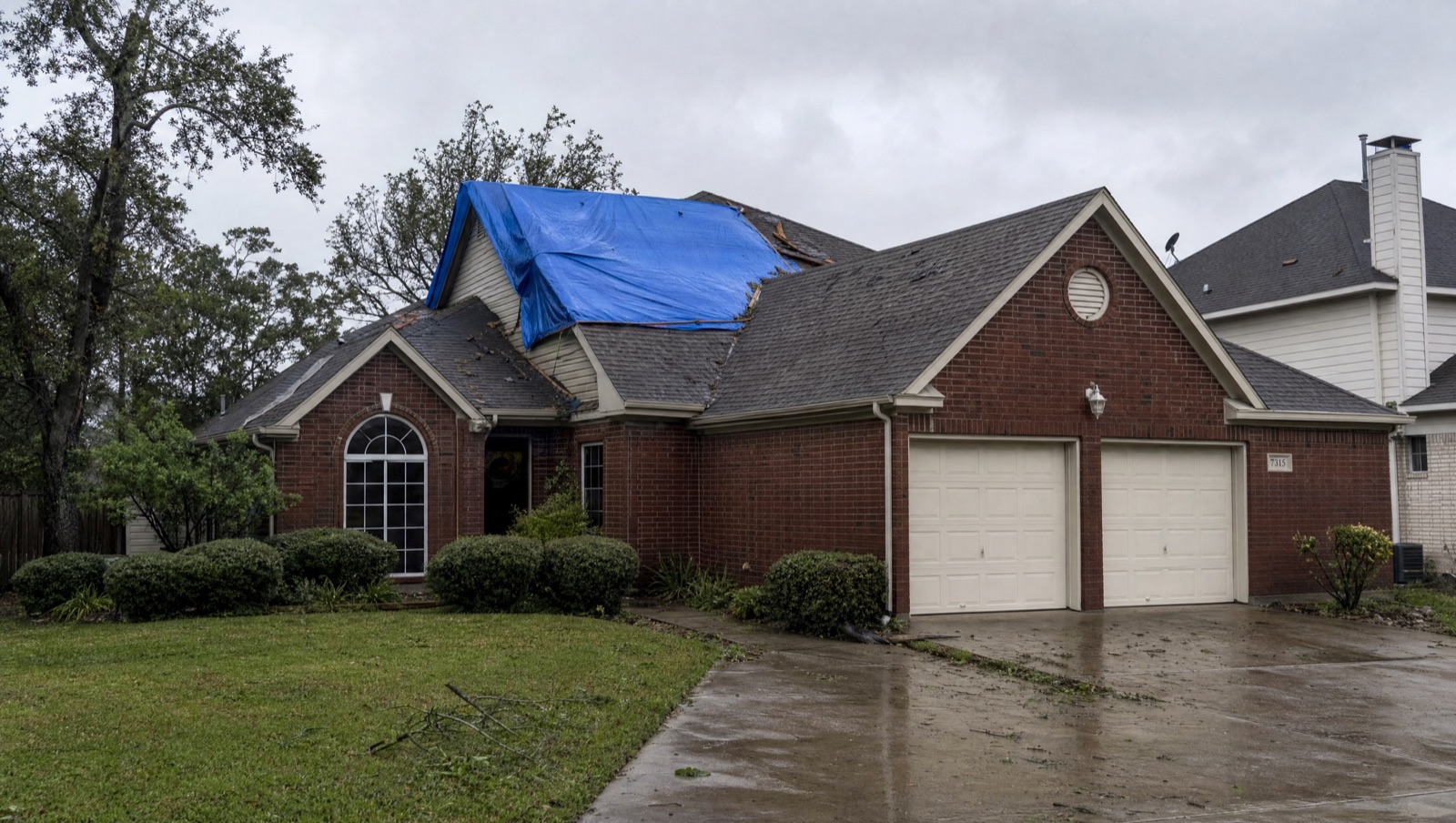
Your homeowners policy usually does, through the loss-of-use or additional living expense provision. It covers the reasonable extra cost of living elsewhere while your home is unlivable. You do not arrange and fund it alone: your carrier assigns the claim, and a housing company finds you somewhere to stay.
If you are reading this a day or two after a fire, a flood, or a burst pipe, the practical question is what happens next and in what order. That is what the rest of this covers.
You call your carrier. They open a claim and assign an adjuster. Ask directly whether your policy includes loss of use and what the limit is, because that answer shapes every decision after it.
Displacement is not automatic after damage. It follows from the home being unsafe or uninhabitable: structural damage, no water, no power, smoke contamination, or active water intrusion.
Most carriers use insurance housing companies to handle placement. They take the referral and find accommodation that fits the claim and the family. This is the person to talk to about what you actually need.
Placement can be same-day when suitable inventory is standing ready. Furnished single-family homes are usually the scarce item, so being specific early helps.
Repairs run past the first estimate more often than not. A well-run placement keeps your calendar open so an extension does not mean a second move.
| Hotel | Furnished apartment | Furnished house | |
|---|---|---|---|
| Typical fit | A few nights | Individuals and couples | Families displaced from a house |
| Kitchen | Rarely | Usually | Yes |
| Separate bedrooms | No | Limited | Yes |
| Pets | Restricted | Varies | Usually workable |
| Yard and parking | No | Limited | Yes |
| Stays near your school district | Depends on the corridor | Depends on the corridor | Depends on inventory density |
As a principle: the placement that works is the one that changes the fewest things at once. Losing your house is enough. Changing schools and commutes on top of it is what turns a bad month into a bad year.
This is why proximity matters more than square footage. A slightly smaller home ten minutes away is almost always better than a larger one across the metro.
They are solving a constrained problem quickly, and vague answers cost you options. Be specific about five things.
How many people, and their ages. Bedroom count follows from this.
Your school district, by name. Not the general area. The district.
Pets, with size and number. Say this on the first call. It narrows inventory sharply and finding out late costs a day.
Work constraints. A night-shift worker who sleeps during the day needs a house rather than a shared-wall unit.
Accessibility needs. Single-story, step-free entry, or a ground-floor bedroom.
A family in Frisco came home from a Sunday service to find their kitchen ceiling collapsing after a second-floor pipe burst. Their carrier placed them in one of our homes in the same school district within 18 hours. Their children did not miss a school day. The family stayed 67 nights.
Note the length. The first repair estimate is rarely the final one, and 67 nights on what began as a short displacement is unremarkable in this channel.
We supply homes to insurance housing companies. We do not adjust claims, we do not decide your limit, and we cannot tell you what your policy covers. Those questions go to your carrier and your adjuster, and nothing here should be read as a statement about your coverage.
We also cover four Texas metros, not the whole state. If your loss address is outside DFW, Austin, Houston, or San Antonio, your housing company will find you a different supplier.
Policies generally contemplate comparable accommodation rather than a specific type. A family displaced from a four-bedroom house is not well matched to a hotel room. Ask your adjuster and your housing company for a single-family option, and say why.
Until your home is livable, subject to your policy limit and the terms of your claim. Ask your adjuster for the limit early, because it affects what makes sense to accept.
You can state your constraints, and good housing companies work to them. School district and distance from the loss address carry the most weight. Availability of the right home in the right place is the real limit.
In a carrier-arranged placement, generally no. If you book something yourself before speaking to your carrier, you may be reimbursed at a rate you did not expect. Call first.
Extensions are normal. Tell your housing company as soon as you hear of a delay, so your current home can be held rather than released.
Texas Corporate Homes manages 160+ premium furnished single-family homes across DFW, Austin, Houston, and San Antonio. We supply insurance housing companies, so your carrier or housing company can request one of our homes by name.
If you are working with a housing company now, ask whether a Texas Corporate Homes property is available near your address. If you want to understand how the placement chain works, read what an insurance housing provider in Texas supplies.
